Best Street Interview Agencies for Snapchat, TikTok, and Vertical Social Video
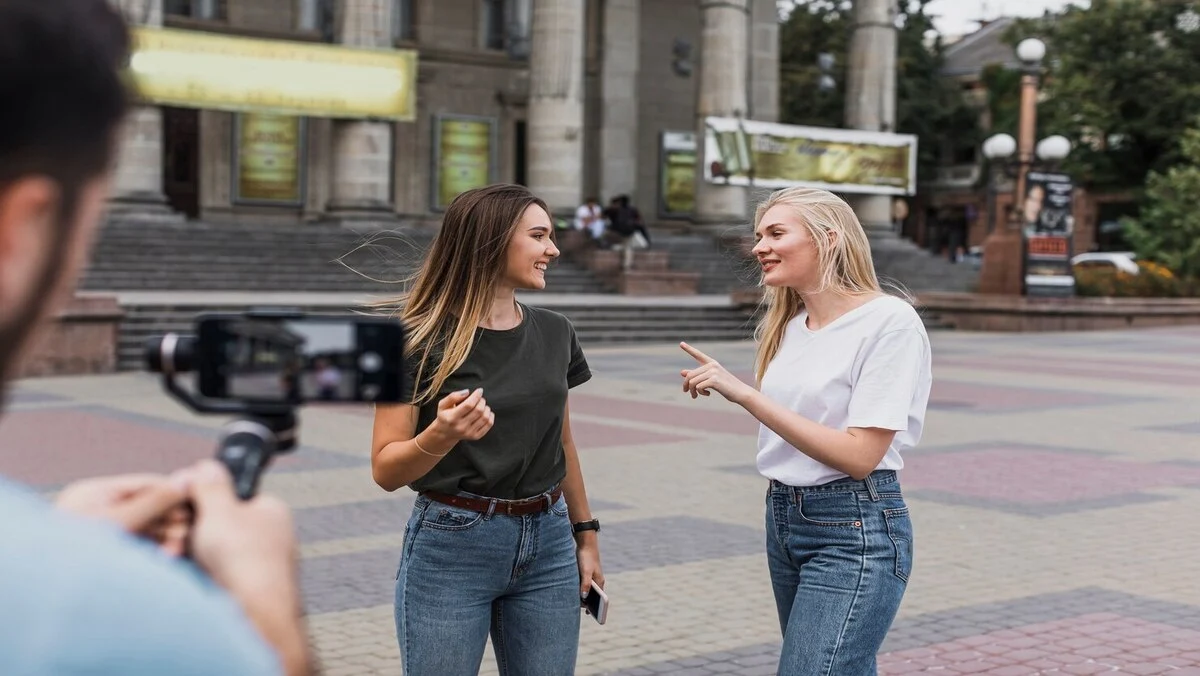
A street interview can look spacious while it is being filmed. There is room around the participant, enough distance for the interviewer to move naturally, and plenty of visual context in the background. Once that footage is prepared for a vertical social platform, the composition becomes much tighter. The participant’s face, microphone, captions, product, interviewer, background movement, and platform controls all have to fit inside a narrow frame without making the video difficult to follow.
That changes how street interview content should be planned from the beginning. A shot that works well in a conventional landscape format may become awkward after being cropped to 9:16, especially if a product moves out of frame, the interviewer is partially cut off, or captions have nowhere comfortable to sit. For TikTok, Snapchat, Instagram Reels, YouTube Shorts, and vertical paid social, production decisions need to account for the screen where the footage will ultimately appear.
The agencies below all offer street interview, vox pop, or public reaction production suited to vertical social video. Their services differ in production model, geographic reach, participant handling, deliverables, distribution, and the amount of control brands retain over the finished creative. Those differences are more useful to buyers than treating every provider as if it offers the same service.
How the Agencies Were Reviewed
This comparison focuses on capabilities that matter for vertical social production. The review considers whether each company produces genuine street interview or vox pop content, which social platforms it publicly supports, whether 9:16 production is documented, how participants are handled, what deliverables are described, and whether the service extends into distribution or campaign management.
Performance figures are treated separately from service capabilities. When an agency publishes results such as views, return on advertising spend, acquisition costs, or campaign revenue, those numbers are treated as company reported results rather than universal benchmarks.
1. Street Poller Media
Street Poller Media focuses on unscripted street interview advertising developed for paid social distribution. Its current materials identify Meta, TikTok, Snapchat, and YouTube among the major channels where its creative runs, including Instagram Reels and Stories, TikTok In Feed and Spark placements, Snapchat Snap Ads and Spotlight, and YouTube Shorts.
The company connects production with creative testing, paid media, and distribution. That setup can be useful for brands that want the team producing the interviews to remain involved after the footage moves into advertising. Different openings, participant reactions, concepts, and edits can be tested instead of treating the first finished cut as the final creative decision.
Brands researching street interview case studies can review Street Poller’s published portfolio across categories including apps and technology, CPG and ecommerce, food and beverage, and other consumer sectors. The portfolio also makes it easier to see how the format changes depending on the product. A taste test, app demonstration, public opinion question, and product comparison place very different demands on the participant and camera team.
Vertical social coverage: Meta, Instagram Reels and Stories, TikTok, Snapchat, YouTube Shorts, and other paid social placements.
Pros
- Direct experience with TikTok, Snapchat, Meta, and YouTube street interview advertising
- Production, creative testing, paid media, and distribution available within the same operation
- Extensive published portfolio across multiple consumer categories
- Multiple creative versions can be developed from one street production concept
- Strong emphasis on paid social use rather than producing footage with no distribution plan
Cons
- Exact asset counts, rights, and campaign scope should be confirmed for each project because the service is built around custom campaign requirements.
Street Poller publishes substantial figures related to campaign scale, media spend, views, acquisition performance, and client results. Those figures come from the company’s own reporting. The more useful material for buyers is the portfolio itself, which shows the types of interviews, products, and vertical advertising formats the agency has actually worked with.
2. Sidewlk Studios
Sidewlk Studios is a Los Angeles street interview production company with a strong focus on direct to consumer products. Its service is unusually clear about vertical delivery, with longer 9:16 hero videos and shorter 9:16 cuts designed for social advertising.
The longer edits give the production team room to preserve a complete interaction before selecting the strongest moments for shorter versions. This can work well for products that generate an obvious reaction, comparison, or demonstration because editors have enough footage to choose from rather than depending on one short answer from every participant.
Sidewlk says it works with real strangers rather than actors. Its FAQ also explains that participants are paid intercepts who sign releases. That point is worth keeping clear when brands describe the finished creative. The participants are not scripted performers, but they are not necessarily uncompensated pedestrians either.
Vertical social coverage: Meta, TikTok, Instagram Reels, and YouTube Shorts in 9:16 formats.
Pros
- Vertical production is planned from the shoot rather than added only during export
- Longer hero edits and shorter social cuts can come from the same production
- Real participants rather than actors
- Published information covers participant releases and usage rights
- Strong fit for products that can be tasted, tested, demonstrated, or compared on camera
Cons
- Street production is centered mainly around Los Angeles.
- Raw selects and some testing options depend on the selected scope.
Sidewlk also publishes individual campaign results. Those figures are useful as examples of completed work but should be read as results from specific client projects rather than expected outcomes for every new campaign.
3. Interview Media
Interview Media builds its production model around a central question. The company turns street responses into short social content for TikTok, Instagram Reels, YouTube Shorts, and X, with question development, filming, editing, captions, pacing, and distribution included in its public service description.
The format is easy to understand. A brand starts with one idea strong enough to generate several different answers, then uses those responses as the foundation for a recurring series. Different participants supply the variation while the question keeps the content recognizable.
The quality of that question matters. A prompt that produces several versions of the same answer can leave a brand with multiple files but very little editorial range. Questions that invite disagreement, personal experience, comparison, humor, or explanation tend to give the editing team more material to work with.
Vertical social coverage: TikTok, Instagram Reels, YouTube Shorts, and X.
Pros
- Clear question based format that works well for recurring social series
- Question development, filming, editing, captions, and distribution are included
- Four cuts per shoot are currently advertised
- Content can be prepared for owned, organic, paid, or Interview Media distribution
Cons
- The format depends heavily on choosing a question capable of producing varied answers.
- Public information about raw footage and usage terms is less detailed than some competitors.
Interview Media also publishes an average view figure. That number comes from the company and should not be treated as a guaranteed result. Buyers will learn more by examining whether the interview concept itself has enough range to sustain several posts.
4. StreetTalk
StreetTalk produces street interview advertising around real participants and unscripted responses. Its current material says hosts work from planned prompts and creative frameworks rather than giving participants lines to repeat.
The service is built primarily for paid vertical advertising. StreetTalk identifies TikTok, Facebook and Instagram Stories and Reels, YouTube Shorts, and Snap among its core placements. Organic versions can also be produced, although the company notes that the editing approach may differ.
StreetTalk’s approach leaves room for hesitation, skepticism, disagreement, and objections instead of automatically cutting every response down to immediate praise. Those moments can give a paid video useful tension, particularly when the participant changes their opinion or raises a question another consumer may share.
Vertical social coverage: TikTok, Facebook and Instagram Stories and Reels, YouTube Shorts, and Snap.
Pros
- Real participants and unscripted responses
- Creative planning happens before filming without scripting participant answers
- Built specifically around paid vertical advertising
- Participant releases are part of the current production process
- Experience across several consumer categories
Cons
- Brands focused mainly on organic editorial content should confirm how the production and edit would differ from StreetTalk’s paid advertising work.
- Media buying responsibilities should be clarified during scoping.
StreetTalk publishes its own campaign data covering areas such as hook rates, return on advertising spend, acquisition costs, and revenue. Those figures describe company reported campaigns and should be read in that context.
5. StreetInterviewVideos
StreetInterviewVideos offers brands several levels of production control. Its social media service supports scripted, partly scripted, and fully unscripted projects. Real strangers can be used when genuine public reactions are the point of the creative, while actors are available when exact wording or timing matters.
That flexibility is useful because street style video and genuine street interviewing are not always the same thing. A scripted actor performance may visually resemble an interview with a passerby, but it should not be presented in a way that implies an unsolicited public endorsement.
The company publishes detailed delivery information. Its current social production materials describe vertical 9:16 edits, captioned and clean versions, raw footage, advertising account ready exports, hook variations, and one year of paid and organic usage rights.
Vertical social coverage: TikTok, Instagram Reels, YouTube Shorts, Meta, and other paid social uses.
Pros
- Scripted, partly scripted, and unscripted production options
- Detailed public information about deliverables
- Raw footage included in the current social production description
- Captioned and clean versions available
- One year paid and organic usage rights clearly stated
- Production designed around vertical social delivery
Cons
- Published pages currently differ on whether hook variations are standard or an additional option.
- Brands seeking permanent usage rights should confirm terms before production.
The main advantage here is clarity around production choices. Buyers can decide how much control they want before filming instead of forcing a tightly scripted campaign into a fully spontaneous format.
6. Vox Pops International
Vox Pops International comes from a broader video research and production background. Its work includes vox pops, interviews, video research, social media production, events, and other forms of filmed public opinion.
The company supports social content for TikTok, Instagram Reels, YouTube Shorts, Facebook, LinkedIn, and other channels. Its service also covers vertical 9:16, square, and landscape formats, along with subtitles, captions, branding, and several shorter cuts from one shoot.
The international side of the business is another major difference. Vox Pops International says its network supports filming in more than 40 countries, with local language production, translation, and subtitles available when required.
Vertical social coverage: TikTok, Instagram Reels, YouTube Shorts, Facebook, LinkedIn, and other social formats.
Pros
- International production across a large network of markets
- Multilingual interviewing, translation, and subtitle capability
- Vertical, square, and landscape delivery
- Useful for both short social clips and longer interview material
- Strong fit for projects combining marketing, research, events, or customer insight
Cons
- The broader production model may be unnecessary for a simple local street advertising project.
- Snapchat is not among the main platforms currently highlighted on its social media service page.
Vox Pops International is especially relevant when the substance of an answer matters as much as the visible reaction. A participant explaining a decision, experience, or opinion may require more context than a quick product reaction, and the company’s wider interview background is suited to that type of material.
7. Voxpop Content
Voxpop Content offers recurring street interview production aimed at startups and direct to consumer brands. Its current service explicitly lists Instagram Reels, Facebook Reels, YouTube Shorts, Snapchat Spotlight, and TikTok.
The published plans are built around monthly output. They combine branded questions, presenters, street filming, editing, and ready to publish vertical videos. The larger plan adds a content strategy session and custom hooks alongside a higher monthly video count.
That structure is useful for a brand that wants street interviews to become part of its normal social calendar rather than an occasional campaign. The important consideration is creative variety. A monthly quota can become repetitive if the questions, participants, locations, and interview formats remain too similar.
Vertical social coverage: Instagram Reels, Facebook Reels, YouTube Shorts, Snapchat Spotlight, and TikTok.
Pros
- Direct support for Snapchat Spotlight
- Straightforward monthly production model
- Questions, presenters, filming, and editing included
- Built specifically around recurring vertical social output
- Published packages make the service easier to understand than a fully open custom brief
Cons
- Public information about usage rights, participant releases, and production geography is less detailed than several larger providers.
- Brands should confirm current package terms before commissioning work.
Voxpop Content makes the most sense when a brand already has enough subject matter to support recurring interviews. A steady production schedule alone will not prevent the format from becoming repetitive.
What Actually Makes a Street Interview Work in 9:16?
A vertical file is easy to export. A well composed vertical interview requires decisions during filming.
The participant’s face, microphone, product, hands, captions, and background all occupy the same narrow frame. If the camera is too close, a facial reaction may remain visible while the product interaction disappears. If it is too far away, the viewer may struggle to read expressions on a phone screen.
Microphone position also affects the composition. A branded microphone flag can establish the interview format and provide subtle brand recognition, but it can also cover the product or dominate the center of the frame if held too close.
Caption space deserves attention before editing begins. A participant framed tightly in the center while holding a product at chest level leaves little open space for readable subtitles. Moving the camera slightly, shifting the participant within the frame, or adjusting the microphone angle can solve the problem during production.
Good vertical production does not make a spontaneous interview look staged. It removes avoidable technical problems so the conversation remains easy to watch.
One Video Across Four Platforms: What Should Actually Change?
TikTok, Snapchat, Instagram Reels, and YouTube Shorts all support vertical social video, so brands do not automatically need four different productions.
A well composed 9:16 master can often provide the foundation for all of them. The question is whether the same version serves the same purpose in every placement.
| Platform | Useful Production Question |
| TikTok | Is the premise understandable without a lengthy introduction? |
| Snapchat | Can the viewer grasp the central idea quickly in Spotlight or a paid Snap placement? |
| Instagram Reels | Does the video work for discovery while still fitting the brand’s wider social presence? |
| YouTube Shorts | Can the interview stand alone for someone unfamiliar with the account or series? |
These are creative questions rather than fixed algorithm rules.
Different cuts make sense when something meaningful changes. A paid advertisement may need a different call to action from an organic video. One placement may benefit from a shorter opening. Testing may require several genuinely different hooks. Captions, branding, or runtime may also need adjustment.
Brands should ask what terms such as cuts, variants, hooks, and deliverables mean in an agency proposal. Twenty files can represent twenty different pieces of creative, or five videos exported in four versions.
What to Check Before Signing the Production Agreement
The finished video count is only one part of a street interview project. Several less visible terms determine how useful the footage will remain after the first campaign.
Participant releases: Confirm that people appearing in the content have agreed to the intended commercial use.
Paid advertising rights: Organic posting rights and paid advertising rights should not be assumed to be identical.
Usage period: Some agencies grant rights for a fixed period while others offer broader terms.
Raw footage: Source files can be valuable if the brand expects to create additional edits later.
Captioned and clean versions: Receiving both gives the internal team greater flexibility.
Production geography: Confirm where interviews can actually be filmed and whether the desired audience can realistically be reached there.
Actors versus real participants: The brief should make clear whether responses are scripted, partly scripted, or unscripted.
Creative count: Ask how many distinct concepts and hooks are included rather than relying solely on the total number of exported files.
Distribution: Confirm whether the agency stops after delivery or also handles activation, testing, or paid media.
Frequently Asked Questions:
Should Street Interview Videos Be Filmed Vertically?
When TikTok, Snapchat, Reels, or Shorts are the main destinations, composing for 9:16 during filming usually gives the production team better control over faces, products, microphones, and captions.
Some providers explicitly document vertical production. Sidewlk lists 9:16 hero videos and shorter social cuts, while StreetInterviewVideos describes vertical first production. Vox Pops International also supports dedicated 9:16 social video.
A vertical export does not automatically mean the footage was originally composed for a phone screen, so brands should confirm this before production.
Can One Street Interview Video Run on TikTok, Snapchat, Reels, and YouTube Shorts?
Often, yes. A properly framed 9:16 video can work across several vertical platforms.
The opening, runtime, captions, branding, call to action, and campaign purpose may still justify different versions. Separate edits are useful when they solve a real creative or distribution problem, not simply because four platforms are involved.
How Long Should a Vertical Street Interview Be?
There is no universal ideal length.
A quick reaction may work in 15 seconds. A participant explaining an opinion, changing their mind, or comparing two products may need considerably longer.
The useful length is the shortest version that preserves the point of the interaction without removing the context needed to understand it.
Are Real Participants Better Than Actors?
They serve different purposes.
Real participants are appropriate when unpredictable public reaction is central to the concept. Actors provide greater control over timing, wording, and delivery. Some providers, including StreetInterviewVideos.com, offer both approaches.
Brands should be clear about which method was used. A controlled performance should not be presented as though it were an unsolicited public reaction.
Does Snapchat Need Different Street Interview Creative?
Not automatically.
Snapchat supports vertical placements including Spotlight and Snap Ads, and several agencies in this comparison explicitly work with Snapchat. Street Poller lists Snapchat within its current advertising distribution, while Voxpop Content names Snapchat Spotlight among its supported formats.
The need for a separate version should depend on the placement, creative objective, and viewing context rather than an assumption that every platform requires completely different footage.
What Should a Brand Ask Before Hiring a Street Interview Agency?
Start with the production details that affect what the brand can actually do with the finished footage.
Ask about participant releases, paid advertising rights, usage periods, raw footage, captioned and clean exports, number of distinct concepts, hook variations, filming locations, revisions, and distribution responsibilities.
Those answers usually reveal more about the practical value of the project than the headline number of videos.
Shoot for the Screen Where the Interview Will Live
Street interview agencies can look similar at first glance because the finished videos often share familiar ingredients: a microphone, a public setting, a question, and an unscripted response. The production systems behind those videos can be very different.
Some agencies connect production directly with paid media and testing. Others concentrate on native 9:16 filming, recurring social output, international vox pops, or flexible combinations of actors and real participants. Those differences affect far more than visual style. They influence rights, locations, edit possibilities, creative control, and how easily footage can move between platforms.
The strongest choice starts with understanding what the campaign actually needs from the shoot. Once that is clear, the agency can be evaluated on the parts that matter: how it finds and handles participants, how it frames vertical footage, what it delivers, what rights are granted, and how well the finished interviews are prepared for the social environments where people will see them.